

What Dog Gear Does Your Dog Actually Need Quiz
A good harness solves three problems: it prevents trachea pressure from collar pulling, gives you better directional control, and reduces escape risk compared to collars on narrow-headed breeds. The difference between a $15 Amazon harness and a quality harness is adjustability, durability of the clips, and how it fits around the shoulder — cheap harnesses restrict shoulder movement and cause discomfort on longer walks.
Table of Contents
- Our Top Picks
- What's the #1 gear gap you need to fill right now?
- How big is your dog?
- What's your dog's age and energy level?
- Does your dog have any specific challenges?
- What's your budget for this gear?
- 🦺 Your Pick: Dog Harness
- 🛏️ Your Pick: Dog Bed
- 🚗 Your Pick: Dog Car Seat or Travel Crate
- 🥾 Your Pick: Dog Hiking Backpack
- 🏠 Your Pick: Dog Crate
- Frequently Asked Questions
Our Top Picks
Affiliate disclosure: if you buy through these links, we may earn a commission at no extra cost to you.


What's the #1 gear gap you need to fill right now?
How big is your dog?
What's your dog's age and energy level?
Does your dog have any specific challenges?
What's your budget for this gear?
🦺 Your Pick: Dog Harness
Best Overall: Julius-K9 IDC Powerharness ($60–$85) — The Gold Standard
The Julius-K9 IDC Powerharness is the most widely trusted dog harness by trainers and working dog handlers — a single-buckle chest clip, wide reflective handle for control, and a patented interchangeable saddle system. It doesn't restrict shoulder movement (a common problem with Y-front harnesses that attach at the sternum), the buckles are rated for working loads well beyond any dog, and the velcro ID patches are genuinely useful. Available in 16 sizes covering 7 lbs to 100+ lbs. If your dog is a puller, the front clip attachment ring redirects momentum without pain or pressure on the trachea.
Budget Pick: Rabbitgoo No-Pull Dog Harness ($25) — Best Under $30
The Rabbitgoo No-Pull Harness is the most popular budget harness on Amazon for good reason — dual clip (front and back), 4-point adjustment for a custom fit, reflective strips, and a padded chest plate that distributes pressure evenly. For dogs without pulling or escape issues, it's a solid value. The clips are plastic, which is the main durability concern with strong large-breed dogs. Ideal for small to medium dogs on casual walks where you primarily need leash routing rather than serious control.
🛏️ Your Pick: Dog Bed
The most important factor in a dog bed isn't the cover — it's the fill. Cheap polyester fill collapses in 3–6 months. Quality memory foam or high-density bolster foam holds its shape for 3–5 years. Senior dogs with joint issues benefit enormously from orthopedic memory foam. Puppies and chewers need a more durable cover material, not a plush bed they'll destroy in a week.
Best Orthopedic: Big Barker 7" Orthopedic Dog Bed ($189–$289) — For Large & Senior Dogs
The Big Barker 7" Orthopedic Dog Bed is the only dog bed with a clinical study backing its joint health claims — 7 inches of American-made therapeutic foam (not memory foam topped with polyester), a microsuede cover that's machine washable, and a 10-year guarantee that it won't flatten. Specifically designed for large breeds (60+ lbs) and senior dogs. The foam density is comparable to a quality human mattress — your dog will notice the difference if they've been sleeping on a cheaper bed. Available in Large, XL, and Giant for breeds up to 200 lbs.
Best Value: Furhaven Pet Orthopedic Sofa Bed ($45–$75) — For Most Dogs
The Furhaven Orthopedic Sofa Bed offers the best value combination of orthopedic foam support, bolster sides (dogs instinctively prefer to rest their head on a raised edge), and a removable, machine-washable cover. The egg-crate foam base distributes weight and reduces pressure points — meaningfully better than flat polyester fill. Available in 9 sizes and multiple cover materials including a water-resistant option for dogs that track in wet paws. For small to medium dogs or budget-conscious households, this is the first bed to try.
📖 Read our best dog beds for everyday use →
🚗 Your Pick: Dog Car Seat or Travel Crate
An unrestrained dog in a vehicle is a projectile in a crash — at 35 MPH, a 60 lb dog generates 2,700 lbs of force on impact. Beyond safety, proper car restraint reduces driver distraction and keeps anxious dogs calmer by giving them a defined, secure space. The right solution depends on your dog's size: car seats for small dogs, crash-tested harnesses for medium/large, and travel crates for dogs who need a den environment.
Small Dogs (under 30 lbs): K&H Pet Products Bucket Booster ($50) — Elevated + Secure
The K&H Bucket Booster Car Seat elevates small dogs to window height (which calms many dogs significantly), secures to the seat via a seatbelt strap, and includes a tether that attaches to your dog's harness. The bucket shape keeps them naturally contained without feeling enclosed. Machine-washable cover. For small dogs that get carsick or anxious, the elevated position allows them to see out and reduces motion sickness. Fits bucket seats and bench seats. The K&H design has been refined over a decade and is consistently recommended by small-breed owners over cheaper alternatives.
Medium/Large Dogs: Sleepypod Clickit Terrain ($90) — CPS Crash-Tested
The Sleepypod Clickit Terrain is one of the only dog car harnesses that has passed Center for Pet Safety crash testing — it functions as a harness for walks AND a vehicle restraint that clips directly into your car's seatbelt. For medium to large dogs (25–110 lbs), this is the most legitimate safety solution: it distributes crash forces across the dog's chest (not the neck), and the CPS certification means it's been tested at automotive crash standards, not just inspected for construction quality. The harness doubles as a walking harness, so you're not buying a single-use product.
📖 Read our best dog car seats guide →
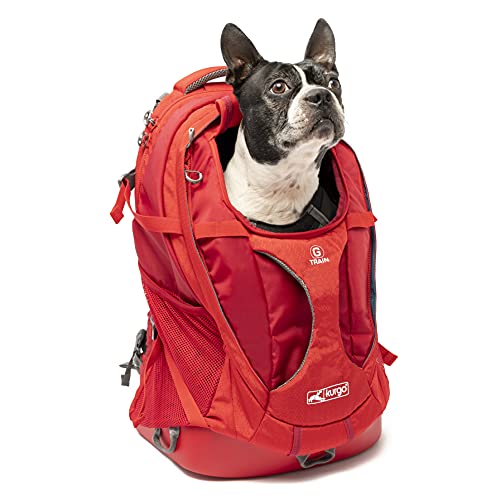
🥾 Your Pick: Dog Hiking Backpack
A dog backpack lets your dog carry their own water, food, and first aid supplies — reducing your pack weight and giving working and herding breeds a job to do, which reduces anxiety on the trail. The key rules: wait until your dog is 2 years old (growth plates close), start with an empty pack, load no more than 25% of your dog's body weight, and check for chafing at the sternum and armpits after every hike.
Best Overall: Ruffwear Palisades Pack ($130) — The Trail Standard
The Ruffwear Palisades Pack is the most trusted dog hiking backpack for serious trail use — dual removable saddlebags (5L total capacity), integrated leash attachment, padded sternum and back panel, and a built-in water reservoir sleeve that fits Ruffwear and most standard hydration bladders. The design keeps weight centered over the dog's shoulders rather than hanging off the sides, and the fit system adjusts across four dimensions to prevent saddlebags from sliding. Ruffwear uses durable Cordura fabric throughout — this pack handles technical terrain, not just neighborhood trails. Available in S through XL.
Budget Option: OneTigris Dog Pack Harness ($35) — Value Trail Carrier
The OneTigris Dog Pack Harness is the best budget dog backpack for casual hikers — dual side pouches (3L total), molle attachment points for customization, padded back panel, and a tactical-style design that medium and large dogs wear well. It's not as precisely fitted as the Ruffwear and the saddle bags have less structure, but for dogs who carry snacks and a small first aid kit on day hikes, it does the job at a fraction of the price. Best for dogs 40+ lbs who have the frame to support the saddle design.
📖 Read our best dog backpacks for hiking →
🏠 Your Pick: Dog Crate
A crate is not a punishment — it's a den, and most dogs genuinely relax in a properly sized, properly introduced crate. The right crate size matters: your dog should be able to stand, turn around, and lie flat, but not so large that they use the far end as a bathroom. For anxious dogs specifically, a covered crate or an enclosed plastic travel kennel (vs open wire) dramatically reduces visual stimulation and calms stress.
Wire Crate: MidWest Homes iCrate Single Door ($50–$100) — The Standard
The MidWest iCrate is the most recommended wire dog crate by trainers — folds flat in one second for transport, includes a divider panel (so you can grow the usable space as a puppy grows without buying two crates), has a removable tray for cleaning, and the wire gauge is appropriate for most breeds. The single-door model is the practical choice for most locations; double-door if you need front and side access. Available in 8 sizes from 24" (up to 25 lbs) to 54" (150+ lbs). For dogs without crate anxiety, this is all you need.
For Anxious Dogs: Diggs Revol Crate ($295) — Escape-Proof + Calming Design
The Diggs Revol Crate is the best crate for anxious, escape-prone, or crate-resistant dogs — rounded corners (no sharp edges), dual-latching mechanisms that prevent door escape, collapsible design for easy transport, and a side panel that can be covered to reduce visual stress triggers. The Revol is also ASTM child safety certified, which speaks to the structural integrity of the latching system. For dogs with crate anxiety, the closed plastic kennel feel (when covered) vs an open wire design reduces the arousal and stress that prevents crate acceptance. Worth the premium for dogs that struggle with standard wire crates.
📖 Read our best dog crates for anxious breeds →
DogGearPro.com participates in the Amazon Associates program and earns commissions on qualifying purchases at no extra cost to you.
Frequently Asked Questions
How do I choose the right dog harness for my dog?
The right harness depends on your dog's size, breed, and pulling habits—a 90 lb Labrador needs a different harness than a 12 lb Shih Tzu to prevent slipping and discomfort. Consider your dog's chest width, neck circumference, and whether they have anxiety or pulling issues, as front-clip harnesses reduce pulling while back-clip harnesses offer more freedom. Measure your dog carefully and test the fit before committing to ensure the harness sits snugly without restricting movement.
What is the best dog crate size for my dog?
The best crate size allows your dog to stand, turn around, and lie down comfortably without extra space that encourages accidents—too large can stress an anxious dog further. Measure your dog's length from nose to tail and height from floor to top of head, then add a few inches for comfort. For growing puppies, choose a crate with a divider so you can adjust the space as they grow.
Is it worth buying a dog GPS tracker?
A dog GPS tracker is worth the investment if your dog is prone to escaping, lives near traffic, or has a history of getting lost, providing real-time location and peace of mind. GPS trackers attach to collars or harnesses and use cellular or satellite networks to track your dog's movements, making recovery faster in emergencies. They're especially valuable for anxious dogs or those with high prey drive who might bolt unexpectedly.
How do I choose the right dog bed for my dog's age and energy level?
Match your dog's bed to their life stage and activity level—puppies and senior dogs benefit from orthopedic support, while high-energy dogs need durable, washable fabrics that withstand wear. Consider your dog's sleeping position (curlers need donut beds, sprawlers need flat pads) and any joint issues or anxiety that might require memory foam or enclosed designs. Size matters too: your dog should be able to stretch out fully while still feeling secure.
What dog gear do I need for a car ride?
For safe car travel, use a dog car seat, harness, or crash-tested crate to keep your dog secure and prevent distraction while driving. A dog car seat works best for smaller dogs under 20 lbs, while larger dogs benefit from a backseat harness or vehicle barrier. If your dog gets anxious, combine car gear with calming tools like GPS trackers so you can monitor them during trips.
How do I know if my dog needs a training collar?
A training collar can help with specific challenges like excessive pulling, aggression, or recall issues, but it should only be used after consulting a professional trainer. Different training collars serve different purposes—front-clip harnesses for pulling, martingale collars for escape artists, and specialized collars for behavior modification. Always prioritize positive reinforcement methods first, and choose a collar that matches your dog's size, breed, and specific behavioral needs.
What is the best way to choose dog toys based on my dog's energy level?
Match toy type to your dog's energy level: high-energy dogs need durable, interactive toys like puzzle feeders and fetch toys, while low-energy dogs benefit from soft comfort toys or long-lasting chews. Consider your dog's age, chewing strength, and any specific challenges—anxious dogs may need toys that provide comfort, while bored dogs need mental stimulation. Rotate toys regularly to maintain interest and inspect them frequently for damage to prevent choking hazards.

